AI dubbing for your videos
Translate the speech in your video while keeping the picture unchanged. Choose audio-only dubbing in ChatCut, review the source transcript, and approve the credit estimate.





Trusted by 400,000+ creators
How it works
How to dub a video with AI
- 01
Describe the dub on this page
Write the target language and your picture, voice, and timing requirements above. Open ChatCut and sign in free, then use My Assets → Upload → Files… to add the source video.
- 02
Request audio-only translation
Open the AI panel in Agent mode and @ mention your video. Request audio only, state whether to add captions, and review and confirm the detected source transcript.
- 03
Approve, listen, and edit
Review the paid confirmation and credit estimate before allowing generation. Follow progress in My Assets, play the new video, and check wording and timing before putting it on the timeline.
Why ChatCut
Why use AI dubbing in ChatCut
-
Translate the spoken track
Use the audio-only treatment in video translation for speech in another language. Name the target language and whether to preserve the original voice.
-
Keep the picture unchanged
Request audio-only translation for footage that must stay as shot. Mouth synchronization is optional and changes the picture.
-
Correct the source before generation
Review and edit the detected source transcript before confirming it. Fix names, numbers, and technical terms in the text used for spoken translation.
-
Keep the speaker recognizable
Video translation can match the original speaker’s voice. Review the generated speech for pronunciation and tone before using it.
-
Set the timing and review the cost
Request the exact source duration or allow slight changes for natural pacing. The paid confirmation shows the treatment, full source duration, and credit estimate before generation.
-
Keep the source and the dub
The localized video arrives as a new asset without replacing your original. Use My Assets to find the finished result and drag it onto the timeline when it is ready.
Tips
Get a better result from AI dubbing
Review the source words and choose the picture treatment before requesting translated speech.
-
Check the source transcript
Listen while reading names, measurements, and negative words so translation starts from the intended meaning.
-
Choose the picture treatment
Request audio-only translation to preserve a tutorial screen recording, and specify whether captions should be burned in.
-
Export the excerpt first
Trim and export the wanted section as a separate asset because translation processes and bills the full source.
Use cases
Where AI dubbing fits your videos
-
Narrated software tutorials
When the screen carries the lesson, translate only the narration and keep every click where it was. Ask for the original duration so each spoken step still lands on its action.
-
Lessons with names and technical terms
Fix names and terms in the source transcript before you confirm, then keep translated captions on screen so viewers can read the words they might mishear.
-
Product videos for several markets
Localize one product demo for each market you sell in. Here one video carries six languages side by side; add a dubbed voice where people watch with the sound on.
-
Presenters on camera
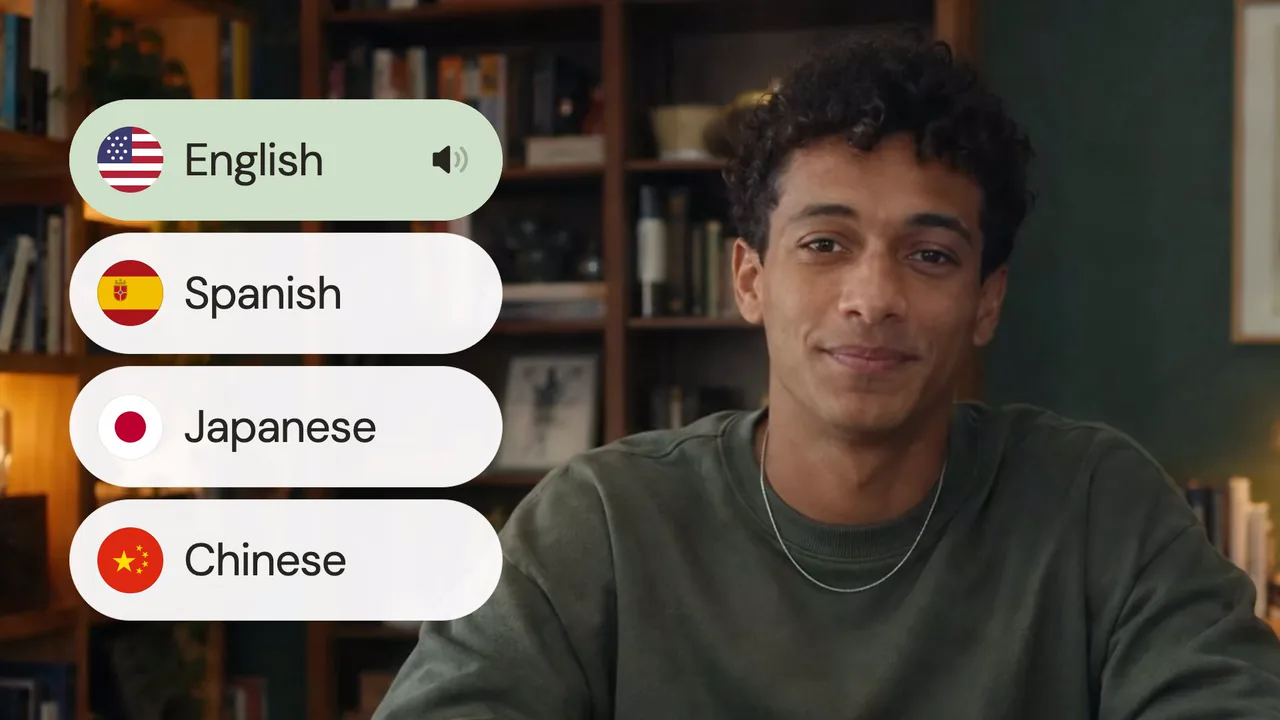
When the speaker's face is on screen, ask for mouth sync as part of the translation. Here one English recording speaks Spanish, Japanese and Chinese.
Keep editing
Finish the video around the new speech
Review the localized asset, trim it, and check captions before exporting. For narration from a new script rather than translated speech, use AI voiceover.
- Conversational editing
- Text-based editing
- Auto-captions
- Motion graphics
- AI voiceover
- Generate clips
- Noise removal
- Multi-track timeline
-
You Can Now Edit Videos with Grok Bot
Edit with Grok Bot -
How to Make 3× the Content With AI (No Editing Experience)
Turn long videos into shorts -
I Turned One Product Photo Into a Full Ad With ChatGPT
Product ads skill -
How to Create Insane Motion Graphics with Astra 6
AI motion graphics
Skills
Hundreds of skills for any video
100+ Skills. No experience needed. Start in one click.

FAQ
AI dubbing FAQ
What is AI dubbing in ChatCut?
It is the audio-only treatment of video translation: speech changes language while the picture stays unchanged. Review the source transcript and paid confirmation, then receive a separate video asset.
Is dubbing free?
No. Spoken translation uses credits, and built-in Agent messages use credits too. Uploading, transcription, manual editing, standard caption editing, and exporting do not consume credits. Check the credits policy for the distinction between editing and AI processing.
Can I keep my own voice in the dub?
Video translation can match the original speaker’s voice. Ask to preserve it, and confirm that you have rights to the footage and its speakers. Review pronunciation and speaker changes in the finished result rather than assuming every line will sound right.
Will the mouth match the new language?
Audio-only translation leaves the original mouth movements in place. Request mouth synchronization as part of video translation when you need it. You do not need to run a separate Lip Sync job on top of that translation.
Which video formats can I import?
Project import accepts formats including MP4, MOV, and WebM, but decoding depends on the codec and browser. H.264 video in an MP4 is a practical starting point. Check supported media formats if an imported file cannot be read.
Can I dub only one section of a long recording?
Yes, by trimming and exporting that section as its own source asset first. Generation processes and bills the full asset you provide. A short excerpt also makes it easier to evaluate difficult terminology before translating a longer lesson.
Can I download the translated video?
Find the completed video in My Assets and right-click its card to choose Download when available. For a finished edit with other clips and captions, put it on the timeline and export the timeline instead. Check the saved file for picture and sound before sharing it.
Can I translate captions without changing the voice?
Yes. Use Translate captions on an existing caption program for text-only translation. That produces a separate translation source you can edit and export. The caption workflow explains source selection and subtitle export.
Related
More dubbing and translation tools
All AI apps
Audio & voice
Captions, text & translation
AI video & images
All free tools
Convert & compress
Edit video
Audio & voice