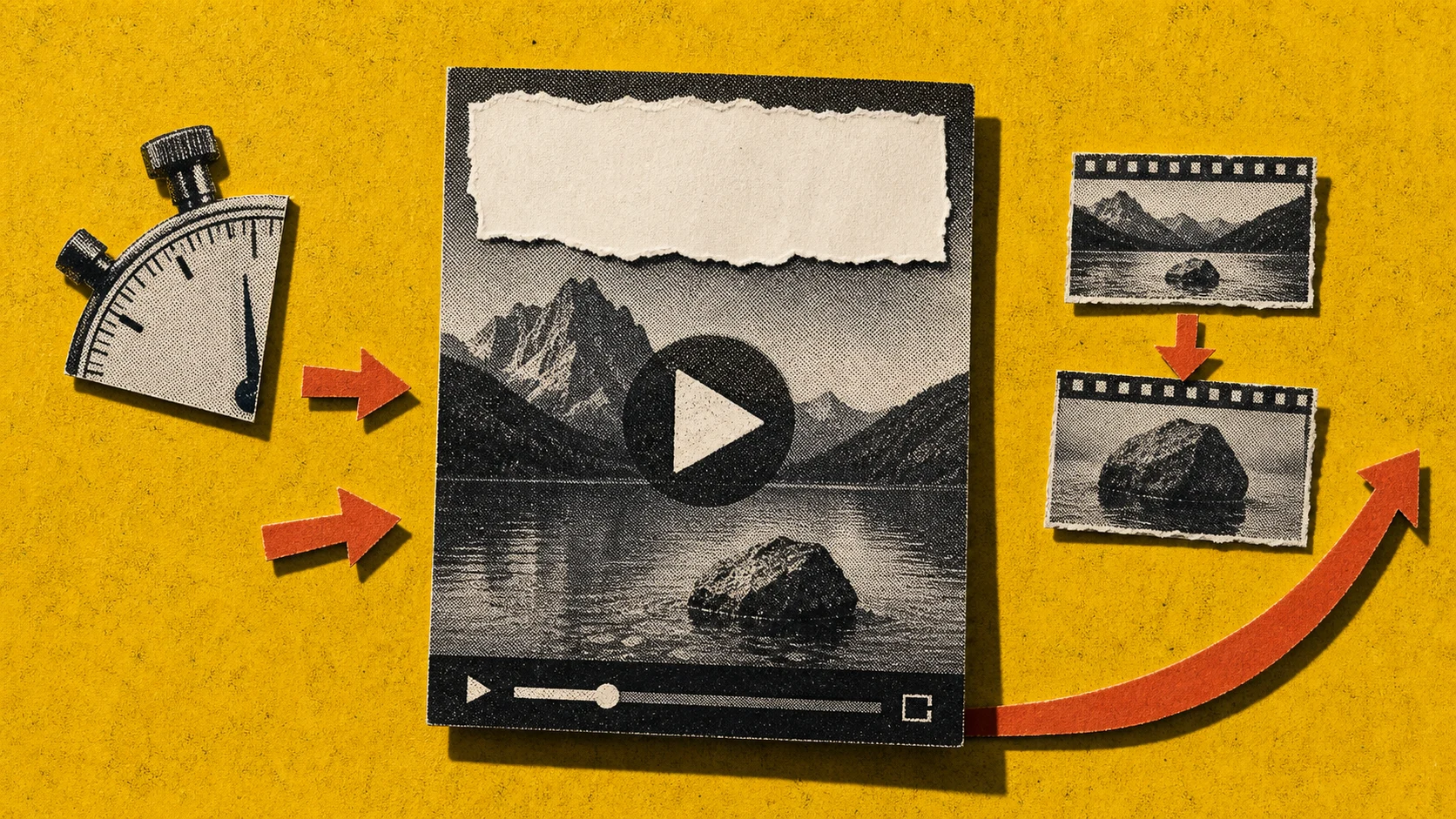
On-screen promise at 0.1 second, with a jump-zoom and a timer overlay. Three-second hold went from 54 percent to 71 percent. Completes climbed 48 percent. Comments multiplied 2.1 times via keyword CTA (Vidocu 2026 tutorial-video case study).
This is one A/B test, on one short-form video, in one quarter of 2026. It’s worth more to your video marketing program than the entire “trends to watch” listicle ranking above this article. The reason is the distinction the first page of search refuses to draw: trends are what’s happening in the industry, and tactics are what you can ship on Monday.
Every play in this article is here because it moved a documented metric in 2026 by more than 10 percent, in an A/B-controllable way. Tactics that moved metrics under that threshold, or only moved them in 2023 case studies recycled by 2026 listicles, aren’t in this list. There are ten. They aren’t “trends.” They’re plays you ship next week.
Tactics vs trends: the distinction the SERP keeps missing
A trend is a directional observation about where the industry is heading. “Short-form video keeps rising.” “AI is integrating into production.” Useful for board decks. Not actionable on Monday.
A tactic is a specific play with a specific input, a specific output, and a specific number it moved. “Burn captions into the first frame, in 4-to-7-word lines, at the top safe zone, in high contrast.” That’s a play. The first time a reader confuses them is when they hire an agency to “execute on the 2026 trends” and get back a deck of trend slides instead of a queue of variants to ship.
The SERP for “video marketing tactics” in May 2026 is mostly trends in tactics’ clothing. The top-ranking articles cite “personalized AI ads see up to 30 percent higher click-through rates” without explaining what counts as personalized, which segment, which platform, what’s the control (Wyzowl 2026, HubSpot State of Video 2026). The ten plays below give you the input, the documented output, and the counter-rule for when the play stops working.
Ten tactical plays that moved a documented metric in 2026
1. On-screen promise at 0.1 second: 54% to 71% three-second hold
The Vidocu case is the cleanest single-tactic A/B in the 2026 SERP. The play: open the video with on-screen text stating the payoff (the “promise”) inside the first 100 milliseconds. Pair it with a jump-zoom and a small timer overlay. The 3-second hold rate jumped 17 points; completes lifted 48 percent; comment-keyword CTAs lifted comments 2.1 times.
When not to use it: cinematic brand films where the first frame is supposed to draw the viewer into stillness. The Vidocu pattern is for tutorial, explainer, and short-form awareness content. Don’t graft it onto a Lovable-style brand film.
2. Burned-in captions in 4-to-7 word lines: capture the 85% sound-off audience
Over 85 percent of social video is watched without audio in 2026 (OpusClip Facebook Reels captions). Layered hooks (visual plus textual plus auditory) triple 3-second holds against single-element intros (TrueFan silent-video hooks). The play: every short-form video ships with burned-in captions in 4-to-7 word lines, high-contrast color, top or bottom safe zone. SRT files alone don’t count; captions must be visible without enabling them.
When not to use it: there isn’t a “when not.” This is a floor, not a tactic, by 2026. Treat it as table stakes.
3. Sub-60-second for awareness, 5 to 12 minute for consideration
Short-form ranks highest-ROI for 48.6 percent of marketers (HubSpot 2026). The trap is treating that statistic as a length recommendation for the whole funnel. The play: short-form for awareness and paid acquisition; 5-to-12-minute long-form for consideration-funnel buyers actively researching. Same source can ship to both lanes with different cuts.
When not to use it: live-stream and webinar content has its own length logic. The live signal is the value, not the runtime. Don’t force these into the 60-second cap.
4. Six to ten ad variants per paid campaign, weekly rotation
Most teams ship 1 to 2 paid-social variants and run them until creative fatigue collapses the CPM. 2026 auction math favors 6-to-10 variants rotating weekly because each variant earns roughly 3 to 7 days of fresh delivery before audience saturation hits (Zeely video-ad best practices 2026). The play: produce variants in batches of 8, ship in cohorts.
When not to use it: under $5,000-a-month ad budget. The production overhead doesn’t amortize at low spend; you’re better off polishing one variant and running it longer.
5. The 5:3:1 content ratio from one source
Five micro-clips, three medium-length, one flagship piece, all from the same core recording (ImagineArt 2026 trends). The play: don’t think “one video per channel.” Think “one source recording, nine assets.” This is the production-economics tactic that makes channel-by-channel reach affordable.
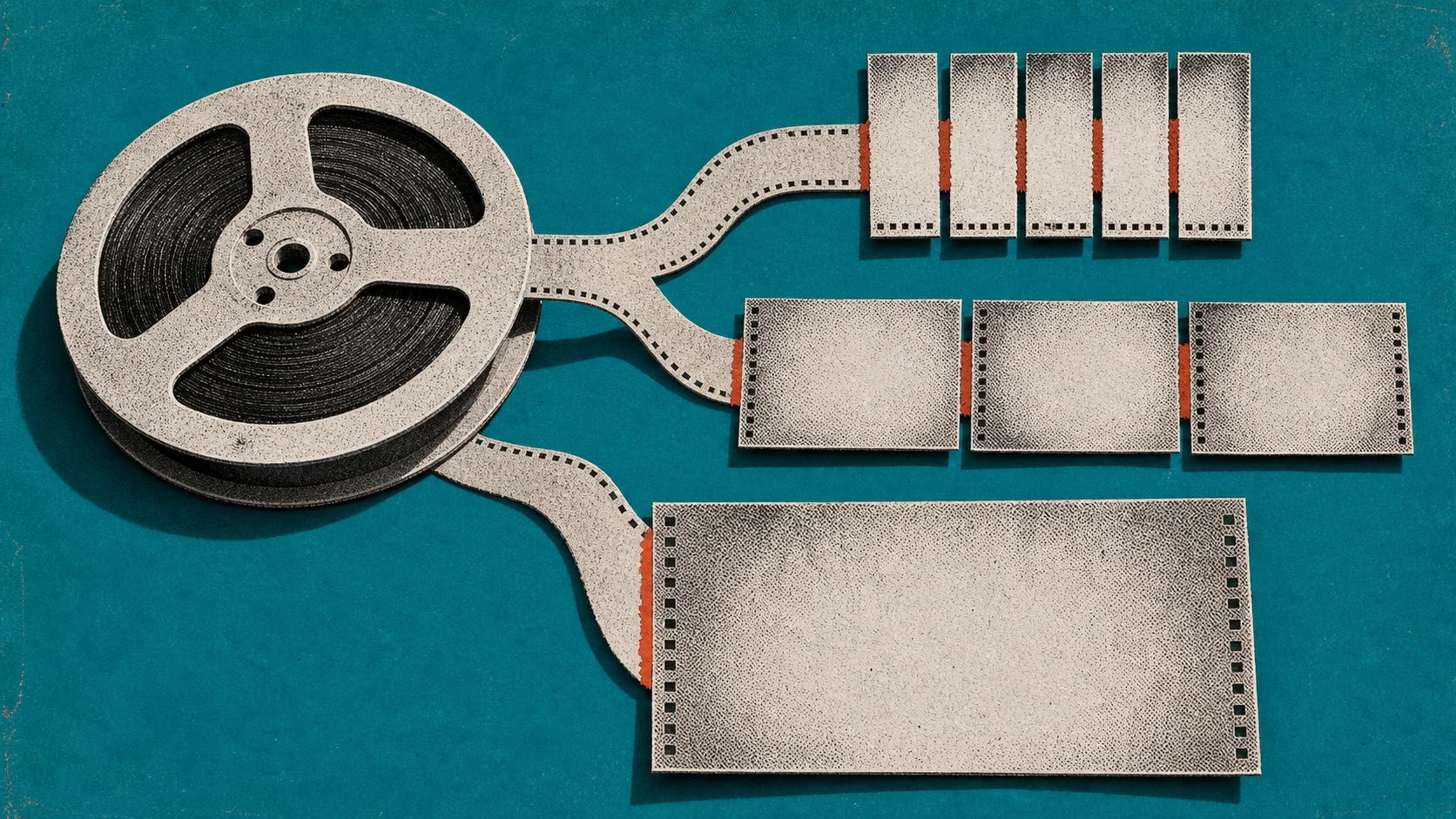
When not to use it: when the source recording is too narrow to support nine angles. A 30-second product demo isn’t a source. A 60-minute founder interview is. The lane lives in talking-head editing of the long source into the nine cuts.
6. Video on the contact page: the under-used placement
Wistia 2026 surfaced a quiet anomaly. Very few companies put video on their contact page, but those pages have very high play rates (Wistia State of Video 2026). The reader is at peak intent (they came to the contact page) and a 30-second founder welcome reduces drop-off into the form.
The play: ship a 30-second contact-page video before producing another homepage hero. The asset costs almost nothing, the placement is uncrowded, and the conversion math is asymmetric in your favor.
When not to use it: ecommerce contact pages where the visitor is filing a support ticket, not making a purchase decision. The intent profile is wrong.
7. Stop cross-posting the same cut: Meta’s July 2025 + April 2026 originality enforcement
The platform shock most teams haven’t priced in. Meta’s July 2025 originality enforcement penalized cross-posted Reels: watermarked TikTok cross-posts get demoted, excluded from in-stream ads and Reels Play bonuses (ALM Corp on Meta’s 2026 rules). Instagram’s April 2026 extension widened the policy platform-wide to cover photo and carousel posts (Engadget on Instagram April 2026, PetaPixel coverage).
Watermarks, minor crops, and basic reposts are explicitly not “original” by Meta’s definition. The play: per-platform cuts with meaningful transformation (different hooks, different captions, different pacing, sometimes different voiceover). The cross-post-from-TikTok playbook that worked in 2022 actively burns reach in 2026.

When not to use it: there isn’t one. Cross-posting the literal same file is now actively penalized. The lane is the social media content production workflow where one source becomes per-platform variants.
8. The 30-day post-publish cadence: saves beat views in the new attention economy
Tactics that lift saves matter more than tactics that lift views in 2026. “Save” CTAs lift reach over 7-to-14 days on Reels (TerraMarket short-form hooks). The play: every video has at least one “save this for later” or “bookmark to come back” CTA built into the script, not added as a graphic afterthought.
When not to use it: top-of-funnel paid-acquisition where the click is the only metric. Save behavior doesn’t help the auction directly; the lane is organic.
9. Comment-keyword CTAs: 1.5 to 2.2 times comment lift
Asking the viewer to comment a specific word (“comment LINK for the doc”) triggers DM-automation flows and raises comment counts 1.5 to 2.2 times against generic “thoughts?” CTAs (TerraMarket 2026). The play: every short-form video ships with a single-word CTA tied to a follow-up asset.
When not to use it: long-form YouTube content where the comment isn’t the conversion event. SEO mechanics (description, chapter markers, subscriber rate) carry more weight than comment counts on the long-form side.
10. Variant testing on the first frame, not the script
The cheapest A/B test isn’t the script or the CTA. It’s the thumbnail and first frame. Most teams test scripts because that’s where they expect the lift; the 2026 data says the first frame and hook line beat both (Zeely 2026). The play: when your testing budget is one variable, test the first frame before anything else.
When not to use it: long-form content where the first frame matters less than the description, chapter markers, and rolling thumbnail variants in YouTube’s experiment surface.
The tactic stack: which three to ship this week
Most readers won’t apply all ten this quarter. Pick three:
| Profile | Tactics |
|---|---|
| B2B SaaS | #2 (burned-in captions everywhere) + #5 (5:3:1 from one source) + #7 (per-platform cuts) |
| DTC paid-social | #1 (0.1s on-screen promise) + #4 (8 ad variants) + #10 (first-frame A/B) |
| Consulting / service business | #6 (contact-page video) + #5 (5:3:1 from one source) + #9 (comment-keyword CTAs) |
These stacks aren’t strict. If you disagree with one slot, the disagreement is now specific instead of vague, and you can defend your own pick against this baseline.
The common thread: every one of the three stacks above leans on tactic #5 (one source, many cuts) as the production-economics backbone. That isn’t an accident.
The production reality: ten tactics, one source, prompt-driven editing
The ten tactics above all assume a video gets cut, re-cut, captioned, variant-tested, first-frame-optimized, and reshaped per platform. That’s editing labor.
For most teams, the bottleneck isn’t strategy; it’s the hours an editor spends moving frames around a timeline. The 2026 workflow that makes ten tactics affordable is text-based editing of a long source recording into all the variants. Upload the founder interview or sales call. The transcript appears. Cut by editing text. “Pull the 90 seconds where she handles the most common objection.” “Find every take where I say the differentiator phrase.” “Burn captions in 4-to-7 word lines, top safe zone, white-on-black contrast.” The output is per-platform cuts from one source.
ChatCut sits in this lane via text-based editing. Same Chrome-only / browser-only / Free Plan with 15 one-time credits and 1080p output that the rest of the cluster mentions. The boundary stays honest: ChatCut doesn’t run beat-synced music montages or Ultra HD master finishing. For the cinematic-hero-film tactic that isn’t on this list, hire a director. For the ten tactics that are, no timeline scrubbing. No menu diving. Just say what you need. The relevant deep-dive is turn long videos into shorts for the long-source cut-down pattern, and repurpose video content for the multi-platform variant pattern.
Five tactical questions worth a real answer
What’s the single most-underrated tactic right now? Contact-page video. Wistia’s 2026 data shows it has the highest play rate of any company-website placement, and almost no one ships it. The production cost is one 30-second founder welcome clip.
How long should an ad hook be? Different question for different lanes. For paid social, the first 0.8 seconds are decisive; for organic, the first 3 seconds. In both cases, the on-screen promise in the first frame matters more than the first-three-seconds rule.
Are burned-in captions overkill? No. They are a floor, not a tactic, by 2026. 85-plus percent of social video is watched without sound. SRT files alone don’t capture sound-off scroll.
Should I A/B test the script or the thumbnail? The thumbnail and first frame, before anything else. The lift documented in 2026 case studies is bigger from first-frame variants than from script variants, and the production cost of a first-frame swap is essentially zero.
What’s the worst tactical mistake teams make? Cross-posting one cut to five platforms and assuming Meta won’t penalize it. July 2025 and April 2026 enforcement is real. Per-platform cuts with meaningful transformation aren’t optional anymore.
Already running three of these tactics and need a faster way to ship the cuts? Try ChatCut Free. Prompt-driven editing for the one-source-many-cuts workflow, 1080p output, no watermark on paid tiers.