“We’re a five-attorney boutique, and we hired an agency to make a promo video last quarter. They sent us a $14,000 thirty-second piece with three drone shots of the courthouse, two attorneys reading from a teleprompter, and a stock track that sounds like a Mastercard ad. The conversion data on the landing page is identical to before we ran the video.”
This message arrived from the managing partner of a personal-injury firm earlier this month. It’s the most common service-promo failure mode of 2026, and it’s not the partner’s fault. The agency that produced the video was working from a playbook that assumes “promo video” means “promote a product.” For a law firm, a consulting practice, an accounting firm, a healthcare practice, or an agency, there is no product. There is a person’s brain, an outcome that hasn’t happened to the buyer yet, and a trust signal that has to compress into ninety seconds before the click goes away.
That asymmetry breaks every product-promo playbook on the first page of search. This is the rebuild.
Service promo isn’t product promo, and the SERP keeps conflating them
Product promo: show the SKU, demonstrate the feature, place the shoppable tag, watch the instant purchase complete. The conversion is mechanical. The buyer can try, return, refund, or repeat.
Service promo: prove expertise, signal trust, walk the buyer through an outcome that hasn’t happened to them yet. The conversion is psychological. The buyer can’t try, can’t return, can’t refund in any meaningful sense after the engagement begins. They’re hiring a brain and a reputation, not a product.

This asymmetry drives the entire format selection. Video testimonials lift conversions 80 percent and make customers 72 percent more likely to trust a brand (Famewall video testimonial statistics 2026). 92 percent of B2B buyers watch a testimonial before purchasing. 97 percent find user-generated content more credible than vendor content (WiserReview testimonial stats 2026). 59 percent of executives prefer watching to reading. And 73 percent of B2B businesses see positive ROI from video specifically because the conversion mechanic depends on trust rather than transaction.
The numbers say testimonial and founder video should dominate the service-promo mix. The execution says they don’t, because most agencies producing service-promo videos haven’t priced in the asymmetry.
The trust math: why testimonial and founder video dominate service conversion
In a service business, the buyer can’t try the product before buying. The only way to de-risk the purchase is proxy proof (a testimonial from someone who already bought) or proxy authority (the practitioner’s credibility, demonstrated on camera).
Both are video formats. Both have documented lift. The Famewall and WiserReview 2026 datasets agree: video testimonials drive 2.7 times more purchase decisions than written testimonials, and B2B testimonial-driven ads deliver 2-to-3-times higher CTR with 20 percent more conversions than feature-led creative (OneIMS B2B testimonials guide).
The catch is execution. The numbers reflect outcome-specific, single-story, under-90-second testimonials. Multi-client highlight reels and over-scripted “client-reads-from-talking-points” videos don’t earn the lift; audiences in 2026 can smell the difference between authentic and produced.
Five formats that work for service promo (and when to use each)
Format 1: Founder or practitioner talking-head, the credentials proxy
Single camera, the founder or lead practitioner on screen explaining their philosophy, methodology, or specific point of view. The conversion logic: in a service business, the buyer is hiring this person’s brain. They need to see and hear them first.
Cost band: $500 to $3,000 with a small production team. Under $300 with a phone, a USB mic, and decent lighting in the office. One law firm working with Consultwebs lifted phone calls by 33 percent after redoing its video program around attorney-led founder talking-head plus client testimonials (Consultwebs law firm video case). The 2026 legal market values authenticity over polish; that pattern generalizes to most boutique service categories.
Best for: solo practitioners, two-to-five-partner firms, boutique consultancies, therapists, executive coaches. Loses for large enterprise consultancies where the buyer is buying the firm’s brand rather than the founder, and loses when the founder genuinely isn’t watchable on camera. In that case, route to format 2 or format 5.
Format 2: Client testimonial, the 80% conversion lift when the testimonial is honest
A client speaks to camera about their experience: the problem they had, the work the firm did, the outcome they got. Cost band: $300 to $2,000 per testimonial. Can be self-shot if the client is comfortable with a phone interview.
This is the format with the largest documented conversion lift in the service-promo category. Landing pages with testimonial video lift conversions 80 percent (Famewall 2026). 2.7 times more purchase decisions than written testimonials (WiserReview 2026). 92 percent of B2B buyers watch one before buying.
The practical rule from the data: outcome-specific, single-story, under 90 seconds wins. Multi-client highlight reels lose. Best for any service category with happy clients willing to appear on camera. The constraint to name honestly: regulated jurisdictions limit testimonials for legal practice; healthcare practices face HIPAA limits on patient testimonials; therapy practices need careful consent and anonymization. Check your jurisdiction’s rules before producing.
Format 3: Case study walkthrough, the outcome proof for high-ticket services
Walks through one specific client engagement. Situation, work done, outcome achieved, with on-screen documents, data, or before-after evidence where available. Cost band: $2,000 to $8,000, closer to a documentary short than a testimonial.
B2B testimonial ads built around case-study walkthroughs deliver 2-to-3-times higher CTR and 20 percent more conversions (OneIMS 2026). Best for consulting firms, agencies, and B2B services where deal size is $50,000 or more, and the buyer needs evidence of repeatable methodology. Loses for low-ticket services where the buyer doesn’t watch this far down the funnel, and loses for services with confidential client work (legal, therapy, financial advisory with NDAs) where the case study can’t be told publicly.
Format 4: Process or methodology explainer, for services with a unique “how”
60-to-90 second motion-graphics or whiteboard-style explainer of the firm’s specific methodology or process. Cost band: $1,500 to $7,000 depending on motion-graphics density.
Explainer videos lift landing-page conversion up to 86 percent (Wyzowl 2026, Vidico SaaS explainer examples 2026). Best for agencies and consulting firms with a proprietary methodology worth differentiating, and coaching practices with a named framework. Loses when the methodology is generic and the explainer ends up describing what every competitor does. Also loses for solo practitioners: the buyer doesn’t need a methodology video; they need to see the practitioner.
Format 5: Mini-documentary brand film, premium services, infrequent shoot
A 2-to-4 minute narrative combining founder voice, client voices, and process B-roll into a single short film. Cost band: $8,000 to $30,000-plus.
Best for established firms with $5 million-plus revenue investing in evergreen brand video for the website, investor conversations, and partner introductions. The trust-lift range is in the same band as case-study video, but the production economics only work at this revenue tier. Loses for small firms where the cost doesn’t amortize, and loses when shot too soon (the firm’s story hasn’t stabilized).
Service-by-industry fit: which format wins for which practice
| Practice type | Primary format | Secondary format |
|---|---|---|
| Law firm (boutique) | Format 1: founder talking-head | Format 2: testimonial (jurisdiction-permitting) |
| Accounting practice | Format 3: case-study walkthrough | Format 1: founder talking-head |
| Healthcare practice | Format 1: founder talking-head | Format 4: process explainer (HIPAA limits testimonials) |
| Consulting firm | Format 3: case-study walkthrough | Format 4: methodology explainer |
| Marketing or design agency | Format 2: client testimonial | Format 3: case-study walkthrough |
| Therapy or executive coaching | Format 1: founder talking-head | Format 2: testimonial (consent / anonymization) |
The pattern: most service categories anchor on either format 1 (founder) or format 2 (testimonial) as the primary, with formats 3 or 4 as the supporting case-and-credentials layer. Format 5 (mini-documentary) only joins the mix at the $5M-plus revenue tier.
The production-economics reality: editing labor is the bottleneck
Service businesses don’t have a shortage of source material. They have founder interviews, client testimonials, sales calls, panel recordings, podcast appearances, conference talks. The bottleneck is turning that material into format-specific cuts.
The 2026 workflow that makes this affordable is text-based editing of long source recordings into the five formats above. The founder’s 90-minute Q&A becomes a 60-second founder talking-head cut (format 1), a 30-second contact-page version, and a series of 15-second clips for paid social. The 30-minute client testimonial recording becomes a 90-second outcome-specific cut (format 2) plus a longer case-study walkthrough version (format 3). The transcript appears; cuts happen by editing text instead of scrubbing video timelines.
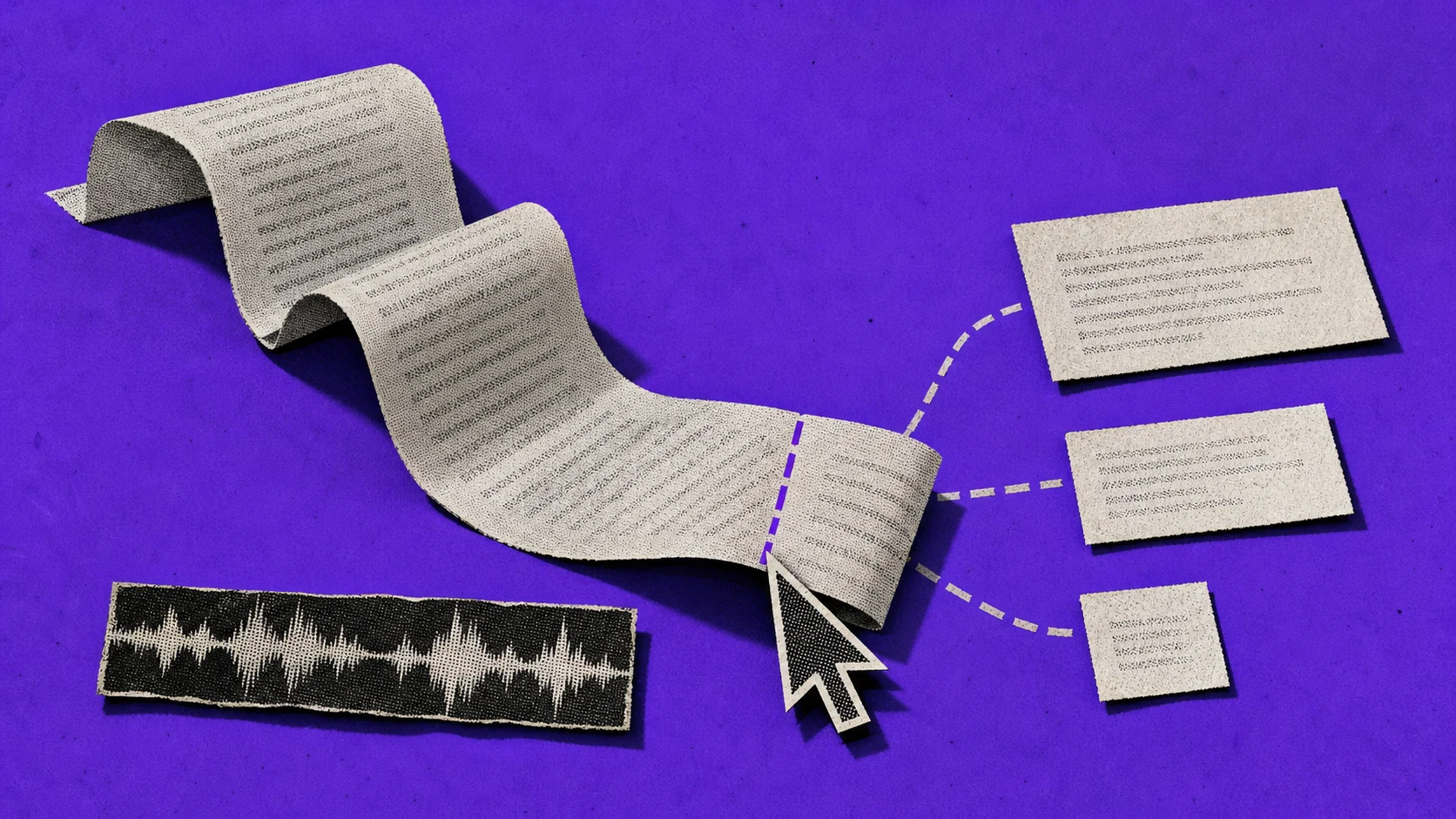
ChatCut lives in this lane via text-based editing of the long source. The boundary stays honest: ChatCut doesn’t replace a director for the mini-documentary format 5, and isn’t the tool for the cinematic-brand-film budget tier. For formats 1 through 4, prompt-driven editing is the lane. Don’t click through menus. Just tell ChatCut what you want.
The natural anchor links: talking-head editing for format 1 production, AI captions for the burned-in captions every testimonial needs in 2026, text-based AI video editing for the deep dive on the transcript workflow, and repurpose video content for the long-source-to-many-cuts pattern.
Five service-business questions worth a real answer
What’s the single highest-ROI video for a $5M law firm in 2026? Founder talking-head as homepage hero plus an outcome-specific client testimonial on the intake page, if your jurisdiction allows testimonials for legal practice. The Consultwebs case suggests a 30-percent-plus phone-call lift is achievable.
Why are most service-promo videos generic? They’re produced by agencies templating the format across industries. The shot list (“drone shots of the building, two reads to camera, B-roll of handshakes, motion-graphics outro”) generalizes badly because the trust mechanic in each industry is different. Specificity in execution is the only way out.
Should I use stock B-roll for a service promo? Rarely. Stock B-roll triggers the “corporate generic” tell that 2026 audiences distrust. The exception is process-explainer footage where stock B-roll genuinely fits the abstract step being illustrated; otherwise, use real footage of the practice or no B-roll at all.
What’s the minimum budget for a credible service promo? Under $500 if the founder is watchable, the lighting is workable, and editing labor is amortized via prompt-driven editing of recordings the firm already has. The expensive part is shooting; if you can re-cut existing recordings into the formats above, the marginal cost is editing time only.
How often should I re-shoot? Founder talking-head every 12 to 18 months as the practitioner’s perspective evolves. Client testimonials are evergreen until the case becomes stale (typically 24-36 months unless the client moves on or the outcome becomes outdated). Mini-documentaries can sit on the homepage for 3-to-5 years if the firm’s positioning is stable.
Cutting your founder interview or client testimonial into all five formats this week? Try ChatCut Free. Prompt-driven editing for the long-source-to-format-cut workflow, 1080p output, browser-only.