Every AI workflow covered below maps to a specific TikTok ad type. Spark Ads, In-Feed, UGC-style, Generative-from-URL: four ad types, each with its own creative requirements, its own algorithm relationship, and its own best-fit AI tooling. Tools that produce ads which trigger TikTok’s polished-brand downranking get flagged as lose conditions, even when the marketing copy frames them as the lift. There are five workflows worth running in May 2026. They aren’t interchangeable, and the listicles ranking above this article mostly treat them as if they were.
Two facts anchor the rest of the piece. Meta’s ad-frequency data shows that creative repetition above 3.4 exposures per week per audience correlates with a 45 percent drop in conversion (AdGPT on AI UGC and creative fatigue). DTC brands at $50K-plus monthly paid media report wasting $10K to $20K per month on fatigue, or $120K to $240K annually, when variant volume falls below the 15-active-variants-per-campaign threshold the same data identifies as the floor. AI’s job, in this category, is solving that volume problem without burning the creative quality the variants need to keep working.
The second fact is the authenticity premium. TikTok’s Creative Center data, surfaced repeatedly by 2026 analytics platforms, finds that ads mimicking organic creator content outperform polished brand videos by roughly 22 percent on view-through rate (Segwise on 2026 TikTok AI tools). The TikTok algorithm reads polish as a brand-content signal and quietly suppresses it on the For You surface; UGC-style aesthetics get amplified. That’s the lift any AI ad has to either capture or skip.
Four ad types, not one
Spark Ads are organic posts the brand boosts with paid spend. The engagement signals (likes, comments, follows) travel with the boost, so the boosted post lands in the For You feed already warmed. In-Feed ads are traditional paid creative shipped through Ads Manager into the feed; they look like ads and the algorithm treats them like ads. UGC-style ads are designed to look like organic creator content but ship through the In-Feed slot; the creative aesthetic does the work that the engagement signal does for Spark Ads. Generative-from-URL is the newest category: a tool scrapes a product page, generates a 15-second ad with AI voice and stock-or-generated visuals, and ships it as In-Feed.
Each type uses different creative inputs. Spark Ads need a real organic post to boost, which means a real human or creator shot something first. In-Feed accepts whatever the brand wants to ship. UGC-style needs creator-aesthetic creative, real or AI-mimicked. Generative-from-URL only needs the product URL.
Each type also lands differently with the algorithm. Spark Ads outperform on the authenticity premium because the engagement signal is real. UGC-style captures most of the lift when the aesthetic is convincing. Polished In-Feed loses the premium. Generative-from-URL is the wild card: when the generation is creator-shaped, it scores like UGC-style; when it’s templated, it scores like polished brand creative and bleeds CPM.
The vendor pages ranking for this keyword recommend their own product for all four types. The honest reading of the market in mid-2026 is that no single tool does all four well, and the right workflow depends on which type the brand is actually shipping.
Workflow one: generative-from-URL for rapid testing
Creatify and the cluster of generative-from-URL tools (AdGPT, HyperFX, Async) solve a specific problem: spinning up testing variants for a brand that doesn’t yet have its creative direction set. Paste a product URL, the tool scrapes images and copy, generates a 9:16 ad with AI voiceover, captions, and music. Cost runs $39 to $99 per month for unlimited generations on most platforms, against $3,000-plus per video for traditional UGC production (Async on AI-powered TikTok ads).
The fit case: a DTC brand at the testing-phase of a new product launch, willing to run 20 variants at low spend to find a creative direction worth investing in. The fail case: a premium brand where the templated aesthetic kills perceived value. The reader can usually tell which case applies within ten seconds of looking at one of the AI-generated ads next to the brand’s organic content.
Workflow two: AI UGC creators for high-volume testing
Avatar-led AI UGC ads occupy a different slot. Tools like AdGPT, HeyGen, and the avatar-creator features inside Synthesia generate creator-style ads from a script, with an AI presenter on camera. Cost: $3 to $15 per video produced. Traditional UGC creators charge $150 to $800 per video with 10-to-21-day turnaround. The cost differential alone is around $40,000 annually for a brand shipping ten videos a month.
The catch is the 22 percent view-through gap. AI-avatar UGC scores measurably below real-creator UGC on TikTok’s authenticity-favoring algorithm. The math depends on where the brand falls in the trade-off. At $5K monthly spend, the savings outweigh the conversion penalty for cold-tier testing. At $50K monthly spend, the conversion penalty outweighs the savings, and the brand belongs in workflow three.
The lose condition: shipping AI-avatar UGC as the sole creative for a campaign that’s already past the creative-direction phase. The brand is paying $3 per video for variants that convert 22 percent worse than the $150-per-video real-creator variant. The cost arithmetic flips at scale.
Workflow three: Spark Ads on AI-assisted organic posts
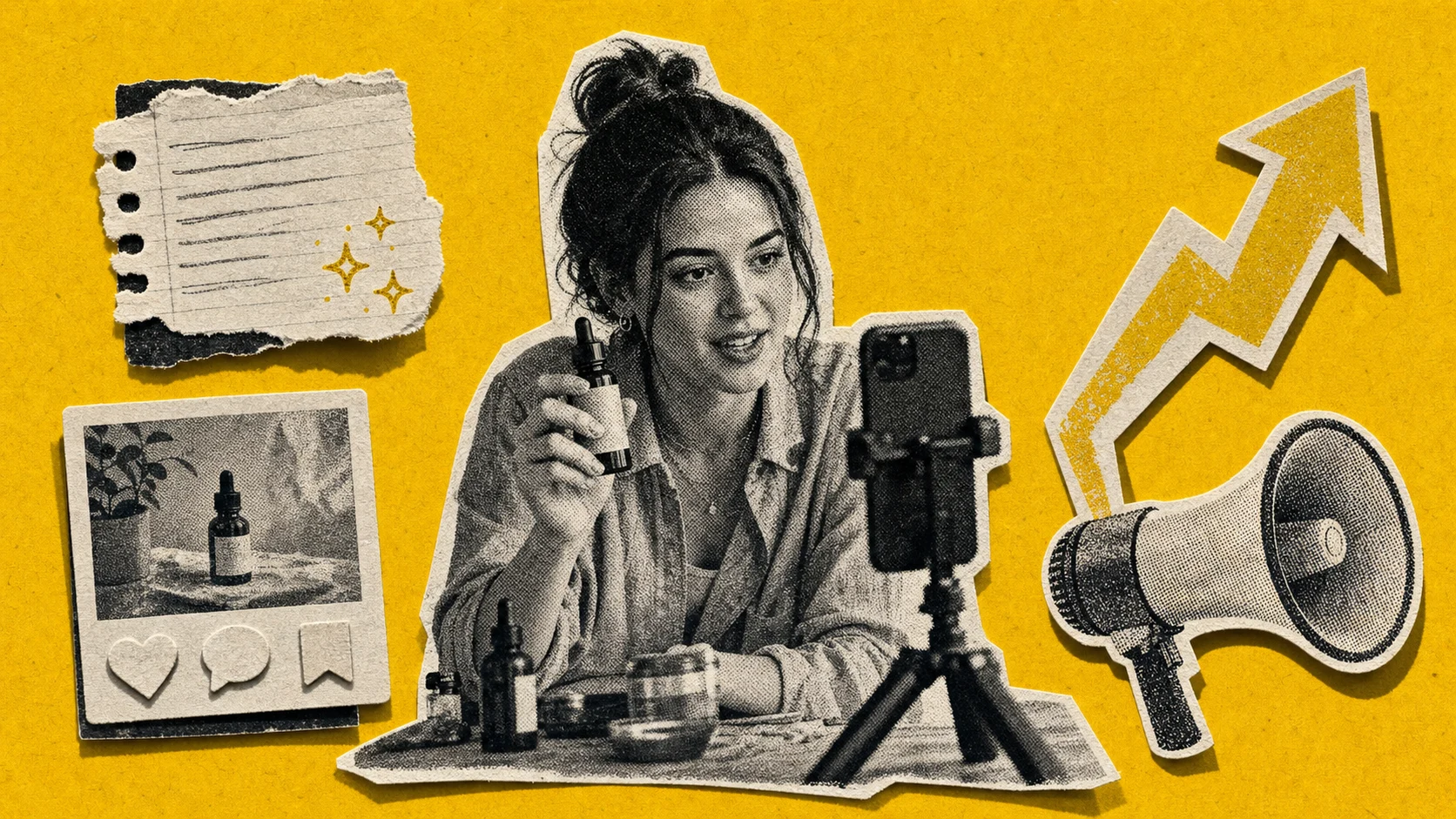
The highest-converting workflow on the platform in 2026 is also the hardest to do right. Generate the organic post with AI assistance (script ideation, hook variants, caption A/B options, music suggestions), have a real creator or founder actually shoot the post, run it organically for a few hours so it earns engagement signal, then boost as a Spark Ad (Creatify on TikTok Spark Ads).
The engagement signal travels with the boost. The 22 percent authenticity lift compounds with the warmed feed surface. The brand pays the boost cost, not the production cost, because the post was always going to ship as organic. Spark Ads in 2026 are the workflow with the cleanest unit economics for brands that have a real human on camera.
The lose condition: skipping the “real creator on camera” step and treating Spark Ads as a way to boost AI-generated organic posts. TikTok’s authenticity systems have been catching this since Q3 2025; the boosted post gets the same suppression as polished brand content despite the engagement-signal mechanic. The shortcut isn’t a shortcut.
Workflow four: variant generation from a single creator shoot
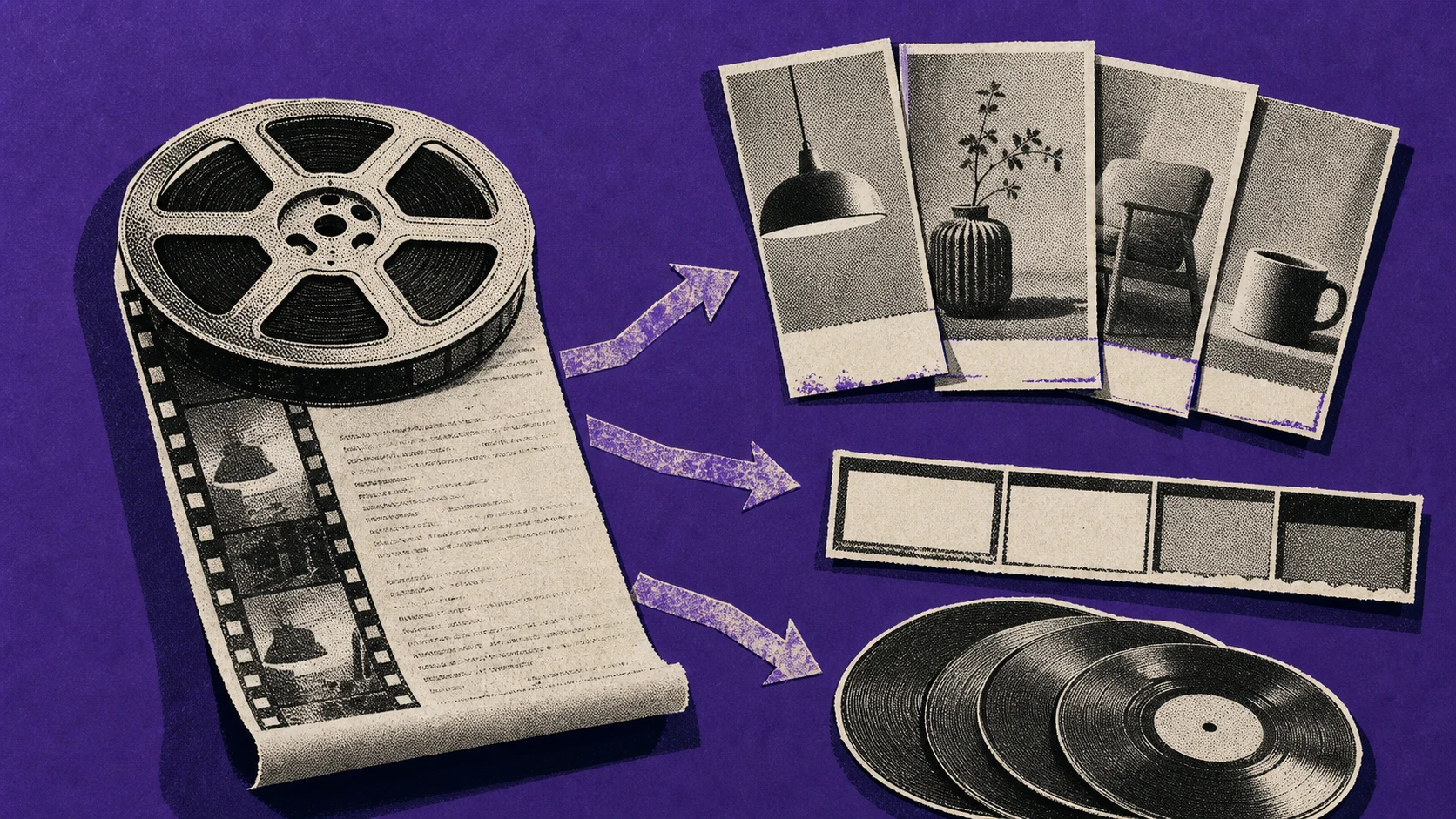
This is the workflow that anchors the 15-active-variants-per-campaign math from the introduction. One creator-shot UGC source video, transcript-edited into 15 variant cuts with alternate hooks, alternate captions, alternate first-frames, alternate music beds. The creator gets paid once. The variants ship across the campaign’s lifecycle with creative-fatigue protection built in.
Cost economics: one $150-to-$800 creator-shot source plus the editing labor for 15 variants. With prompt-based editing tools, that editing labor compresses to a few hours for the full set. Per-variant cost lands at $20 to $60 against $150-to-$800 for fresh creator shoots. The cost savings are real and the conversion premium stays because the underlying source is human-shot.
The fit case: any DTC brand at $50K monthly spend or above that’s already buying from creators. The fail case: source material that’s too narrow to support 15 distinct angles. A 30-second product demo cuts into 15 variants poorly. A 60-minute creator session cuts into 15 variants well.
This is the workflow most DTC operators underuse in 2026. The 15-variants math is widely cited as a rule; the production economics that make it affordable are not, because they require an editing layer that wasn’t widely available until prompt-based tools matured.
Workflow five: multilingual scale-out
A separate workflow that combines with any of the first four. Once a winning variant is identified, AI dubbing tools translate it into 12 to 15 languages without re-shooting. Cost stays roughly flat (the dubbing layer adds cents to dollars per language); reach multiplies by the number of language markets the brand is in.
The fit case: international DTC expansion with a proven winning creative. The fail case: launching multilingual before the winning creative is identified, which spreads the testing budget too thin to find the winner in any single market.
A more subtle fail case worth naming: premium brands where local cultural nuance matters more than language coverage. Luxury, hospitality, financial services often need native creators in each market because the cultural signal is the value proposition. AI-dubbed versions of a US-shot ad will underperform native shoots in those categories.
TikTok’s own AI generation inside Ads Manager
Worth naming as context. TikTok’s “Generate with AI” feature inside Ads Manager produces script and creative concepts from a brief (TikTok official documentation). The third-party tools above compete with this built-in lane. The pattern that surfaces in 2026 reviews: TikTok’s native option is faster for early ideation; third-party tools win on variant volume and creative diversity. Most performance teams end up using both.
The ChatCut workflow inside this market
The article’s central observation is that workflow four (variant generation from one creator shoot) has the cleanest unit economics in 2026 and is also the most under-deployed. The bottleneck is editing labor: turning one 60-minute creator session into 15 distinct ad variants is real work without the right tool.
ChatCut sits in this specific lane. Upload the creator’s source recording to text-based editing. The transcript appears alongside the video. Pull 15 variant cuts by editing text rather than scrubbing through hours of takes. Each variant gets its own first-frame hook, its own caption pass, its own keyword-CTA mechanic. For custom B-roll inserts or generated hook frames (a product close-up the creator didn’t shoot, a stylized title card), the AI image generator and AI video generator chain through GPT Image 2 and Seedance 2.0 inside the same project. The fastest way to edit video: tell an AI what to do.
The principles and the boundaries stay explicit. ChatCut is built for the variant-from-real-creator-source workflow, which is where the 2026 conversion lift lives. ChatCut is not a generative-from-URL tool; Creatify and the cluster own that lane and the cost economics there favor specialists. ChatCut is not an AI-avatar UGC tool; HeyGen and Synthesia own avatar generation. ChatCut is browser-only and Chrome-only, with 1080p delivery on both Free and Pro plans (no Ultra HD output, which TikTok’s surface doesn’t need but premium brand films sometimes do). The Free Plan ships 15 one-time credits to test the workflow on a real shoot. For product ads and marketing videos as the broader use case, the variant workflow above is the natural fit; for the social media content production lane more broadly, the same source-to-cuts mechanic generalizes; for repurpose video content as a deeper-dive walk-through, the long-source-to-variants pattern is covered in detail.
Five questions from DTC paid-social operators
What’s the cheapest workflow to test 15 variants? Generative-from-URL at the cold-test phase. Once a creative direction emerges, move to workflow four (variant generation from one creator shoot) for the brand-tier campaign.
Do TikTok users really detect AI ads? Yes. The 22 percent view-through gap between AI-avatar UGC and real-creator UGC is the documented marker. The audience reads aesthetic signal faster than most operators expect.
Should I use TikTok’s Generate-with-AI or third-party? Both. TikTok native for early ideation, third-party for variant volume and aesthetic diversity at scale.
What does Spark Ads actually lift over In-Feed? Variance is wide by category, but the engagement-signal-travels-with-boost mechanic lifts performance 30 to 50 percent over equivalent polished In-Feed for most DTC categories. The lift is conditional on the underlying organic post being authentic.
Worst AI ad mistake teams make? Generating 15 AI-avatar variants instead of 15 cuts from one real-creator session. The cost savings flip at scale because the conversion penalty compounds across 15 placements.
Variant generation from one creator shoot is the slot ChatCut owns. Try ChatCut Free. Twenty credits to test the workflow, 1080p output, no watermark, Chrome-only.